Hija de La Frontera by Asier Moreno Vizuete: Imagine a literary thriller with the heart of a poet.
Listen it in our podcast
Book Information
The question 'Who are you?' is less important than 'What are you useful for?'
—Narration/Thematic Summary
Pros
- Immersive and unparalleled atmosphere that makes the world feel tangible and almost physically present.
- Dense, lyrical, and poetic prose that elevates the story beyond typical genre fantasy.
- A complex, emotionally scarred, and relatable female protagonist, Ilda, who subverts genre cliches.
- Deep and authentic world-building where the hostile environment itself acts as a primary antagonist.
- A masterful blend of gritty realism with a grounded, almost scientific magic system.
Cons
- The dense, literary prose requires significant focus and may feel slow to readers accustomed to faster pacing.
- A relentlessly bleak and somber tone that can be emotionally taxing.
- The narrative momentum deliberately slows in the middle section, which may feel like a 'sag' to some readers.
Final Verdict
A heavy but profoundly rewarding literary thriller, 'Hija de La Frontera' is an atmospheric and ambitious novel that blends grimdark grit with poetic prose. It leaves a lasting impact through its haunting world and resilient protagonist.
Hija de La Frontera by Asier Moreno Vizuete: Imagine a literary thriller with the
heart of a poet.
Have you ever read a book that felt less like reading and more like breathing in dust, tasting iron, and feeling the chill of a wind that shouldn’t exist?
Imagine a world where the geography itself is your enemy. Not just a mountain you have to climb or a desert you have to cross, but a living, breathing entity that actively rejects humanity. Now, place a character in the middle of that who is so rugged, so deeply carved by her environment, that she feels less like a hero and more like a survivor of a shipwreck that never ends.
That is the sensation of opening the first few pages of “Hija de La Frontera” (Daughter of the Frontier).
Winner of the prestigious Premio Minotauro, Asier Moreno Vizuete has crafted something that defies easy categorization. Is it fantasy? Yes. Is it a thriller? absoluteley. But to stop there would be a disservice. It is a grim, beautiful, mud-soaked meditation on identity wrapped in the skin of an adventure novel. It is the kind of book that demands you slow down, not just to understand the plot, but to savor the sheer weight of the words.
If you are looking for a light beach read, turn back now. But if you are ready to traverse the Frontier, grab your gear. We are going in.
Introduction and The Premise
“Hija de La Frontera” introduces us to Ilda, known as “La Astromante” (The Astromancer), though her talents are far grittier than high-fantasy star gazing. She is a “Saltadora” - a Jumper. In this world, the land is divided. On one side, you have the Baronies, the vestiges of civilization where politics and hunger dance a dangerous tango. On the other, you have the Frontier.
The Frontier is not merely a border; it is a wild, untamed territory teeming with dangers that are both physical and mystical. It is a place where reality thins, where the rumors of ancient wars still echo in the soil. Ilda makes her living guiding people - or things - across this deadly landscape. She is a coyote of the supernatural, a woman who knows the paths that others fear to tread.
The plot kicks into high gear when Ilda is tasked with a mission that seems suicidal even by her standards. She must escort a child. But, as you might expect in a novel of this caliber, this is no ordinary child, and the forces pursuing them are not merely bandits looking for coin.
Moreno Vizuete sets the stage with a premise that feels familiar on the surface - the veteran protector and the mysterious ward - but he twists it. This isn’t “The Mandalorian” with swords. It is a complex web of political intrigue, ancient magic, and the desperate struggle for survival in a world that has moved on from the concept of hope.
The World: More Than Just a Backdrop
Let’s talk about the world-building, because, quite frankly, it is the star of the show.
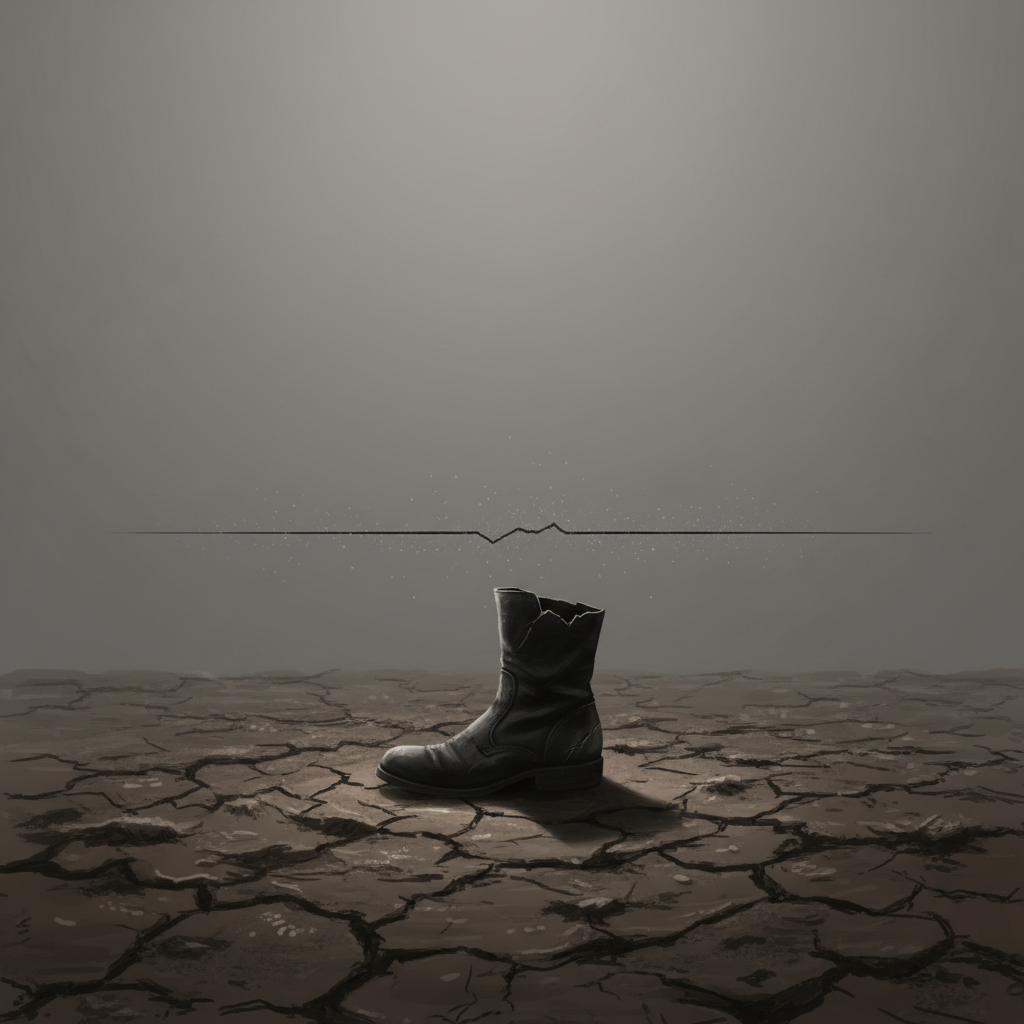
In many fantasy novels, the setting is a stage. It is a painted backdrop against which the actors perform. In “Hija de La Frontera”, the setting is the main antagonist. The Baronies and the Frontier feel vividly, uncomfortably real. Moreno Vizuete does not just tell you it is muddy; he makes you feel the suction on your boots. He does not just say it is dangerous; he creates an atmosphere where the silence is heavier than the noise.
The magic system is fascinatingly grounded. It is tied to the “Great Death” and the history of this broken world. It feels like a mix of science, alchemy, and sheer will. It is not invoked with distinct Latin phrases and wand waves; it is gritty, exhausting work. The author has constructed a cultural landscape that feels authentic, complete with its own slang, its own prejudices, and its own forgotten history.
The “Kastellanos”, the nomads, the politics of the Barons - it all meshes together to curb any suspension of disbelief. You buy into this world immediately because the author treats it with the seriousness of a historian documenting a real war. The setting influences everything. It dictates the scarcity of resources, which drives the plot. It dictates the superstitions of the characters, which drives their decisions. It is a masterclass in immersive writing.
Character Complexity: Ilda and the Cast
Ilda is a triumph of character writing. In a genre that often struggles with writing strong female protagonists without falling into clichés of the “strong female warrior who acts exactly like a man,” Ilda stands apart. She is complex. She is not just physically capable; she is emotionally scarred.
Her development throughout the novel is a slow burn. We peel back the layers of her history - her time in the Baronies, her training, her losses - gradually. She is driven by a mix of mercenary pragmatism and a buried, almost reluctant, moral compass. She is not trying to save the world. She is trying to survive the week. And that makes her incredibly relatable.
The supporting cast, while revolving around Ilda’s gravitational pull, are equally fleshed out. The dynamic between Ilda and the child acts as the emotional anchor of the story. It avoids the saccharine sweetness that often plagues this trope. Their relationship is fraught with tension, frustration, and a hard-won, grudging respect.
The antagonists, too, are given depth. They are not cartoon villains twirling mustaches. They are motivated by their own twisted logic, their own desperate needs in a dying world. This ambiguity allows the reader to not just root for Ilda, but to understand the world that created her enemies.
Narrative Voice: The Poet in the Mud
This is where the review needs to pause and acknowledge the “Literary” part of the title. Asier Moreno Vizuete is not just a storyteller; he is a stylist.
The prose in “Hija de La Frontera” is dense, lyrical, and evocative. The author uses language to paint textures. There is a rhythm to his writing that borders on the poetic, providing a stark contrast to the brutality of the events he is describing. He might be describing a corpse in the mud, but he does so with a vocabulary that highlights the tragic beauty of decay.
For some readers, this might be a hurdle. This is not a book you skim. The sentences are constructed to be weighed. The tone is consistently somber, maintaining a low-humming tension that rarely releases its grip. It creates an atmosphere of claustrophobia, even when the characters are traversing open plains.
The author makes bold stylistic choices, playing with the flow of information, sometimes holding back, sometimes overwhelming the reader with sensory details. It contributes to the feeling of being overwhelmed, which mirrors the experience of the characters perfectly.
Themes: Borders, Identity, and Survival
Deep down, this is a book about borders - “Fronteras”.
Obviously, there is the physical border of the Frontier. But Moreno Vizuete is interested in the other borders: the line between civilization and savagery, the line between living and surviving, and the line between who we were and who we have become.
Identity is a fluid concept in this novel. Characters often have to shed their names, their pasts, and their morals to traverse the landscape. The question “Who are you?” is less important than “What are you useful for?” This utilitarian view of human life is critiqued throughout the narrative.
Belonging is another central pillar. In a world of nomads, refugees, and jumpers, does anyone truly belong anywhere? Ilda is a woman of the middle - not quite of the Baronies, not quite of the Wild. She is an eternal outsider. This theme resonates powerfully, creating a sense of loneliness that pervades the text.
The book also tackles the concept of History vs. Myth. The characters live in the shadow of a past they barely understand. They walk through ruins of giants, interpreting the world through superstition and fragmented knowledge. It reflects our own relationship with history - how easily truth is lost and replaced by legend.
Plot Structure and Pacing
If you are expecting a non-stop action roller coaster, you might be surprised. The pacing of “Hija de La Frontera” is deliberate.
The structure follows the journey, which gives it a linear progression, but the author is not afraid to slow down and camp for a while. There are long stretches of travel, of dialogue, of introspection. The tension is built not through constant explosions, but through the threat of what might happen.
However, when the violence comes, it is sudden, brutal, and fast. The contrast between the slow, creeping dread of the travel sequences and the frantic chaos of the combat scenes is jarring in the best way possible. It mimics the rhythm of war: long periods of boredom and terror, punctuated by moments of sheer adrenaline.
Is it perfect? Perhaps not for everyone. There are moments in the middle third where the density of the description drags the momentum slightly. A reader used to the lightning-fast pacing of modern YA fantasy might find themselves checking how many pages are left. But for those who enjoy immersion, these slow beats are where the world breathes.
Genre Context: Grimdark with a Soul
“Hija de La Frontera” sits comfortably on the shelf next to the “Grimdark” greats. You can feel the DNA of Joe Abercrombie or Mark Lawrence here - the cynicism, the mud, the moral ambiquity.
However, Moreno Vizuete brings a distinctly distinct sensibility to the table. There is a vulnerability here that is sometimes lacking in American or British Grimdark. It feels less cynical for the sake of being edgy, and more tragic. It is “Grimdark with a Soul.”
The innovation lies in the blending of this gritty realism with a magic system (astromancy) that feels almost scientific or distinct rather than high-fantasy hand-waving. It grounds the fantastical elements, making the monsters feel like part of the ecosystem rather than magical intrusions.
Emotional Impact
This book hurts. I will not lie to you.
It is not a “feel-good” story. The emotional journey is arduous. You watch characters you grow to care about suffer. You watch them make terrible choices because they have no good options. But because the suffering is earned, the moments of connection shine brighter.
There is a specific scene involving a campfire and a moment of shared silence that hits harder than any battle. The author understands that in a world of darkness, a single match strike is blindingly bright. The catharsis comes not from saving the world, but from saving a single scrap of humanity.
Cultural Relevance
While set in a fantasy world, it is impossible to read “Hija de La Frontera” without thinking of our own world. The imagery of refugees, of dangerous border crossings, of “coyotes” guiding people to safety, of a world ravaged by ecological or magical disaster - it all feels strikingly modern.
The Baronies represent the hoarding of resources and the fear of the “other.” The Frontier represents the chaos outside our gated communities. Without being preachy or allegorical, Moreno Vizuete taps into the anxieties of the 21st century. It asks us to look at the people on the margins, the “jumpers” of our own world, and see them as human.
Evaluation: The Good and The Challenging
To wrap this up, let’s look at the balance of the scales.
The Strengths: * Atmosphere: Unparalleled. You can smell this book. * Prose: Beautifully crafted sentences that elevate the genre. * Ilda: A protagonist who deserves to be an icon of the genre. * World-Building: Deep, history-rich, and fascinating.
The Challenges: * Density: It requires focus. It is mentally collecting a tax on your attention span. * Bleakness: If you are currently feeling down, this might not be the pick-me-up you need. It is unrelenting in its grim outlook. * Pacing: The mid-section sag is noticeable.
Target Audience
Read this if: * You loved “The Road” by Cormac McCarthy but wished it had magic. * You enjoy the nuanced character work of Robin Hobb. * You are fascinated by the concept of “The Witcher” but want something more literary. * You appreciate Spanish literature and want to see how the fantastical tradition is evolving.
Skip this if: * You want a fast-paced, quip-filled adventure. * You dislike reading about dirt, grime, and bodily fluids. * You prefer “Hard Magic” systems with clear rules and video-game logic.
Final Verdict
“Hija de La Frontera” is a heavy book, in every sense of the word. It carries the weight of its world, the weight of its themes, and the weight of its literary ambition. Asier Moreno Vizuete has written a novel that demands you meet it on its own terms.
It is a thriller, yes. The pages will turn. But it is the heart of the poet that stays with you. It is the haunting image of the Frontier, the silence of the stars, and the resilience of a woman named Ilda that you will remember long after you have put the book down.
In a market saturated with generic fantasy, “Hija de La Frontera” is a jagged, sharp, and precious stone. It might cut you, but that is how you know it is real.
Rating: 4.5 / 5 Stars - A modern masterpiece of Spanish fantasy.
Note: This review assumes a translation or reading of the original Spanish text. The lyrical quality described refers to the author’s original voice, which transcends the language barrier through the strength of its imagery.